
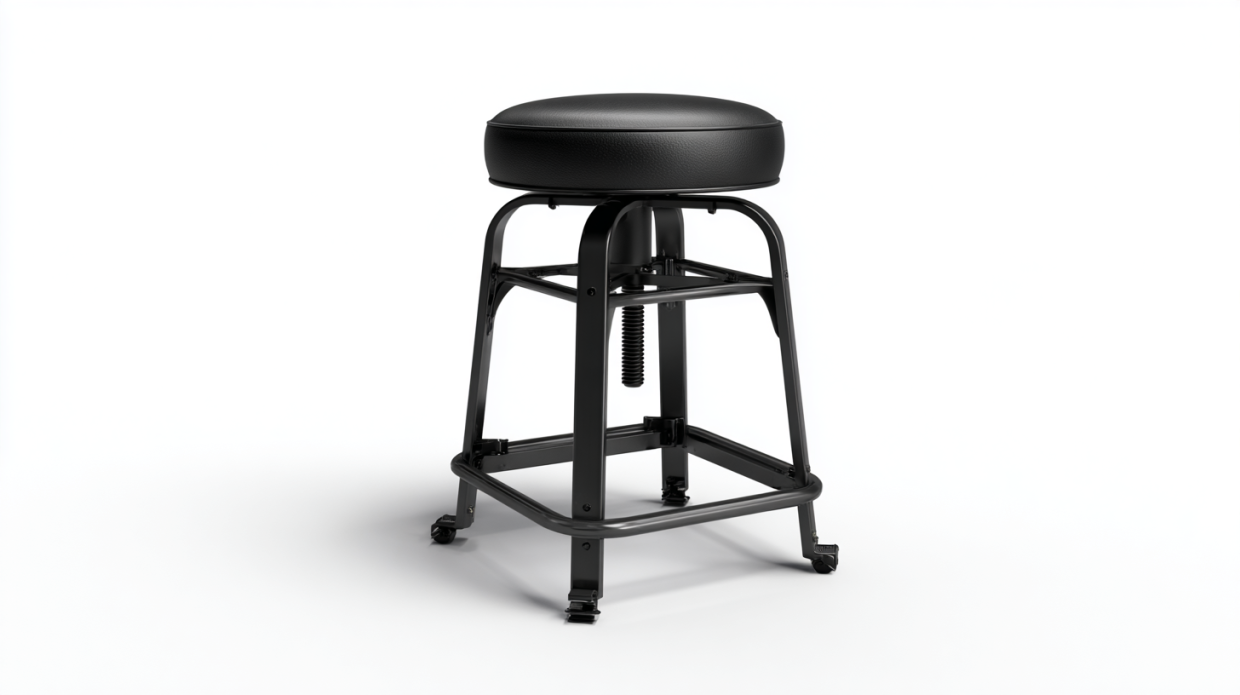
There’s a quiet revolution happening in workspaces everywhere — and it has everything to do with how we sit. From the architect’s studio to the standing-desk-forward startup, from the hospital lab to the high-energy maker space, the heavy duty drafting stool has emerged as the piece of furniture that quietly signals “I take my work seriously.” It’s not just ergonomics anymore. It’s an aesthetic statement, a cultural alignment, and honestly? A kind of flex.
The workspace conversation has matured. Where open-plan offices once demanded bland, interchangeable seating, today’s most intentional spaces treat chairs and stools as deliberate design choices — products that communicate something about the person sitting in them and the broader culture of the room. In this context, the heavy duty drafting stool isn’t simply a chair. It’s a collaboration between engineering and identity, between endurance and comfort, between the functional and the aspirational. And right now, it’s having its moment.
The Drop: Five Heavy Duty Drafting Stools Worth Your Attention
Before we go deep on what makes a great stool, here’s the edit — five standout picks that dominate the market right now, earning their place through durability, design, and sheer real-world performance.
1. Office Master PT77HD 24-7 Intensive Use Heavy-Duty Large Drafting Stool
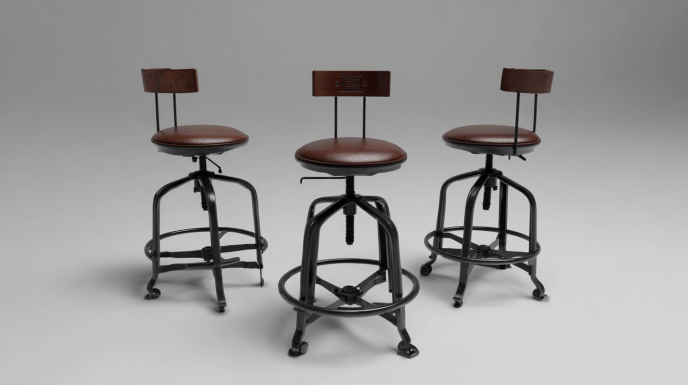
Brief Description: The PT77HD is the workhorse of all workhorse stools. Built for true 24/7 intensive use, this stool was engineered for the most demanding environments on the planet — think dispatch centers, trading floors, and around-the-clock production facilities. It features a mid-sized back and large seat designed specifically for large and tall users, a DCS memory foam seat cushion, independent seat and back tilting, EZ back height adjustment, seat depth adjustment, rocking tilt, and a height-adjustable turn-lock chrome footring. With a 350 lb weight capacity and over-engineered heavy-duty components throughout, Office Master has left absolutely nothing to chance here. Optional upgrades include adjustable lumbar, casters, arms, and an upholstered back — making it one of the most configurable heavy-duty options in the entire category.
Rating: ⭐⭐⭐⭐⭐ (5/5) — Industry benchmark for 24/7 commercial durability
Price Range: $809.25
2. Harwick Evolve All Mesh Heavy Duty Drafting Chair — Gunmetal Finish (2250D-BK)
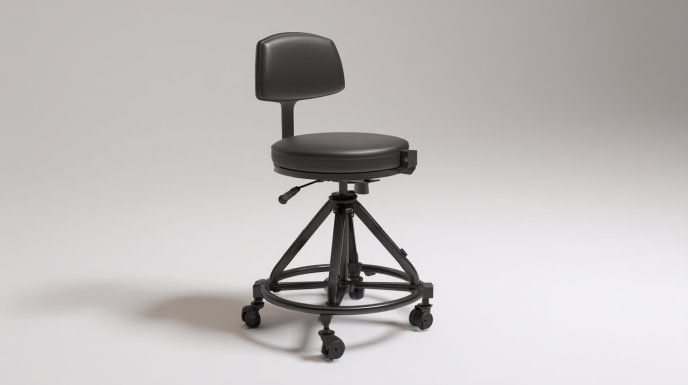
Brief Description: The Evolve series from Harwick has become something of a cult staple among workspace enthusiasts who want heavy-duty performance without sacrificing visual identity. Featuring Harwick’s proprietary Duragrid™ black mesh on both the seat and back, this stool circulates air during long sessions while its gunmetal finish frame delivers a sharp, contemporary edge. Designed to support up to 325 lbs, it includes a 2-to-1 Synchro Tilt with tilt tension adjustment, infinite tilt lock, flip-up armrests that allow you to slide closer to your work surface, built-in lumbar support, and a generous 22-inch height-adjustable chrome footring. Three colorway options — gunmetal, platinum, and the all-black Dark Knight edition — mean it slots into practically any workspace aesthetic without compromise.
Rating: ⭐⭐⭐⭐½ (4.5/5) — Best mesh heavy-duty pick for the style-forward buyer
Price Range: $334.90 – $385.13
3. Boss B1680-BK 300 lb Heavy Duty Office Stool (Black)
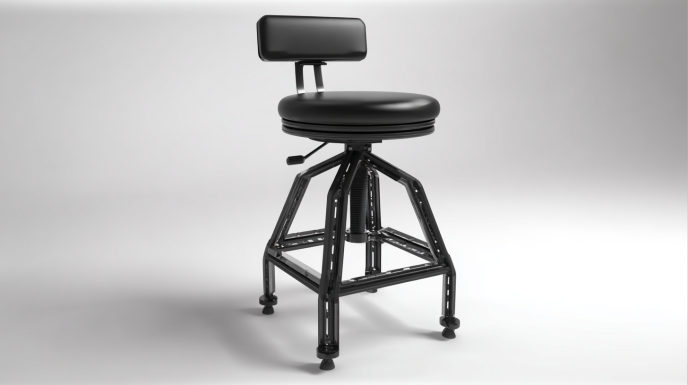
Brief Description: Boss Office Products has long been a trusted name in commercial seating, and the B1680-BK is one of the most direct, no-nonsense heavy-duty drafting stools in the market. Upholstered in CaressoftPlus vinyl — a material that mirrors the look and feel of leather while being significantly more durable and easy to clean — this oversized stool features a pneumatic gas lift, an oversized seat and back, a 20-inch chrome footring for dependable leg support, and a wide 27-inch black nylon base fitted with hooded double-wheel casters for rock-solid, mobile stability. With a 300 lb weight capacity and a price that doesn’t require a budget meeting, it covers the vast majority of professional users without the premium outlay of some competitors.
Rating: ⭐⭐⭐⭐ (4/5) — Best value pick for genuine heavy-duty construction
Price Range: ~$213.87 – $233.12
4. Harwick Multi-Function Leather Drafting Chair (100KL)
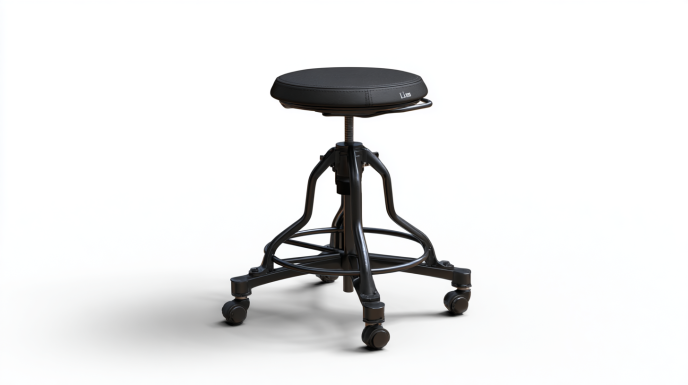
Brief Description: If the drafting stool is having a cultural moment, the 100KL is the leather jacket of that moment. Dressed in rich, top grain genuine black leather across every seating surface, this chair doesn’t just perform — it makes a statement the second you walk into the room. The ergonomic design delivers a 5-inch thick contoured seat and back, built-in lumbar support, pneumatic seat height adjustment, seat angle adjustment, adjustable back height, back angle adjustment, tilt with tension adjustment, and height and width adjustable urethane padded armrests. Rated for users up to 250 lbs, it ships backed by a 10-year limited warranty — a testament to Harwick’s absolute confidence in the craftsmanship. This is the luxury tier of the drafting stool world, and it earns every dollar.
Rating: ⭐⭐⭐⭐½ (4.5/5) — Best leather drafting stool for executive-level daily comfort
Price Range: $331.58 – $381.32
5. Safco Vue 24/7 Heavy Duty Drafting Stool (3394BL)
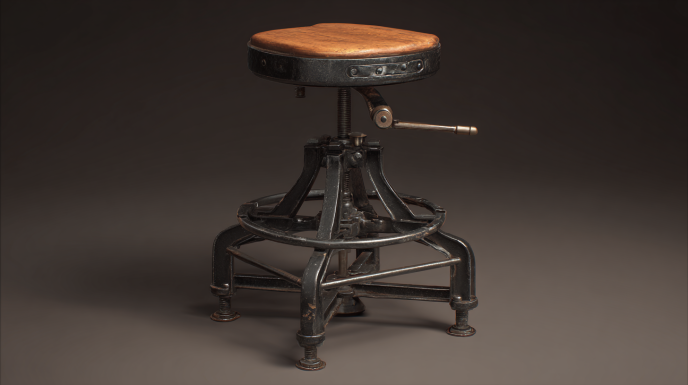
Brief Description: Safco’s Vue stool occupies a rare lane in this market: 24/7-rated commercial durability at a mid-range price point that doesn’t require an enterprise-level budget. Built to endure continuous, round-the-clock use in environments where seating never gets a rest day, this stool is a go-to recommendation from facilities managers, healthcare procurement teams, and operators of any space that demands intensive-use certification. Its heavy-duty construction, ergonomic seat profile, and commercial-grade footring make it a compelling choice for buyers who want institutional confidence in a stool that doesn’t look strictly institutional. It’s the practical collab between commercial-grade specs and everyday versatility.
Rating: ⭐⭐⭐⭐ (4/5) — Best 24/7-certified option at a mid-market price
Price Range: $462.73 – $504.38
Why the Heavy Duty Drafting Stool Is Having Its Moment
There’s a genuine cultural reason why heavy duty drafting stools are trending well beyond their traditional niche. For decades, these stools lived almost exclusively in drafting rooms, architecture studios, and laboratory settings — functional tools for functional people doing very specific work. But as workspace culture has broadened, as standing desks and elevated work surfaces have gone from tech-sector novelty to mainstream expectation, and as the ergonomics conversation has migrated from niche HR policy to genuine lifestyle priority, the drafting stool has made a full crossover.
Walk through any creative agency, any modern medical office, any co-working space designed by someone who actually thinks about how people inhabit a room, and you will find drafting stools alongside or even replacing traditional office chairs. Part of this is purely practical: more people are working at elevated surfaces, counter-height desks, and height-adjustable workstations than at any point in office history. But a significant part of it is also about identity. There is a directness to a heavy-duty stool that resonates with people who value transparency in their tools — what you see is what you get: engineered support, honest materials, zero pretense.
The “heavy duty” designation carries genuine cultural weight in this context. In a marketplace saturated with chairs that promise durability and deliver disappointment within eighteen months, heavy-duty certification — typically defined as a weight capacity of 300 lbs or higher, combined with reinforced mechanical components, commercial-grade cylinder hardware, and tested construction — has become a real differentiator. When someone reaches for a heavy-duty drafting stool over a standard model, they are communicating something about their relationship with their tools: longevity over disposability, considered investment over impulse purchase, substance over surface appeal.
The Architecture of a Great Heavy Duty Drafting Stool
Not all heavy duty drafting stools are built equal, and understanding the engineering behind the category allows you to read a spec sheet like someone who actually knows what they’re looking at.
Weight Capacity and Structural Integrity
The most immediately legible differentiator is weight capacity. Standard drafting stools are typically rated to 250 lbs. True heavy-duty models push this boundary to 300, 325, or even 350 lbs — and the difference isn’t just in the number printed on the product page. A higher weight capacity signals reinforced cylinder hardware, a more robust base (typically wider diameter, heavier gauge steel or high-density nylon), and denser foam composition in both the seat and back cushions. The Office Master PT77HD achieves its 350 lb capacity through a combination of over-specified components at every level of the design. This isn’t marketing language — it’s the physical result of deliberate engineering decisions made to exceed, not merely meet, commercial performance expectations.
The Footring: Consistently Underestimated, Never Overrated
Ask any experienced ergonomics consultant what separates a good drafting stool from a great one, and the height-adjustable footring will appear early in that conversation. At elevated seat heights — typically between 22 and 35 inches — the floor is no longer reachable, meaning your legs dangle without support. A properly engineered footring provides a stable platform that dramatically reduces pressure across the backs of the thighs, promotes better pelvic positioning, and meaningfully reduces fatigue during extended sessions.
The best footrings are height-adjustable to accommodate different users, constructed from chrome or heavy-gauge steel for durability under daily use, and dimensioned generously enough to allow different foot positions throughout the day. Several premium models, including the Harwick Evolve series, feature a 22-inch chrome footring — larger than the industry baseline — specifically to expand foot placement options and reduce fatigue on long shifts.
Seat Depth Adjustment: The Ergonomic Detail That Changes Everything
One of the most consistently underappreciated features in the drafting stool category is seat depth adjustment — the ability to slide the seat pan forward or backward relative to the back support. This feature, often listed as a seat slider, allows users of different torso proportions to find their optimal seated position: back fully supported by the chair’s lumbar structure, thighs approximately parallel to the floor, and a correct clearance between the seat’s front edge and the backs of the knees.
The Office Master PT77HD includes seat depth adjustment as a standard feature. So does the Harwick 100KL. When you encounter this specification, treat it as a signal of genuine ergonomic seriousness — it’s predominantly found in stools built by manufacturers who have invested in understanding how human bodies actually sit.
Cushion Technology: Memory Foam, High-Density Dual-Layer, and Mesh
Seating surface technology is another area where heavy-duty drafting stools diverge sharply from their standard-grade counterparts. The primary configurations you’ll encounter are:
Memory foam seats, as featured in the Office Master PT77HD’s DCS memory foam seat cushion, contour to the user’s body and distribute weight evenly across the contact surface. This reduces pressure points at the sit bones and hip area and tends to maintain its structural integrity under heavy daily use better than conventional foam formulations.
High-density dual-layer foam, as seen in the Office Master TLC seat format, uses two distinct foam densities co-molded into a single cushion. The softer upper layer delivers immediate comfort while the firmer support layer beneath maintains posture over time. This dual-density architecture is increasingly standard in true commercial-grade seating, where a cushion is expected to perform across thousands of hours of use.
Mesh seating surfaces, as employed in the Harwick Evolve’s Duragrid™ mesh, trade some cushioning in favor of breathability and thermal regulation. For users who work in warmer environments or simply run hot, this is a significant quality-of-life advantage that compounds considerably over an eight-hour shift. The waterfall front seat edge used alongside mesh seats further reduces leg pressure and is worth looking for as a paired specification.
Tilt Mechanisms: Matching Movement to the Demands of the Work
Different professional tasks call for different tilt behaviors in a stool. A synchro tilt mechanism, like the 2-to-1 synchro tilt in the Harwick Evolve series, coordinates seat and back movement in a 2:1 ratio — the back reclines at twice the arc of the seat tilt — which more accurately mirrors the body’s natural movement arc during recline and reduces shear force on the lumbar region. Independent seat and back tilt, as configured in the Office Master PT77HD, allows each component to be dialed in separately, giving power users granular control over their sitting posture at any given time. Infinite tilt lock — available on the Harwick Evolve and several other premium models — is perhaps the most practically valuable feature in this subset: it allows you to lock the stool at literally any point in the tilt arc, not merely at a few predetermined positions, which means you can find your exact working angle and stay there.
The Warranty Conversation: What “Heavy Duty” Should Actually Promise
In the drafting stool category, warranty coverage functions as a meaningful proxy for genuine manufacturer confidence. The brands leading this market don’t simply advertise durability — they commit to it contractually. Harwick’s entire product line carries a 10-year limited warranty across all models, which is exceptional for the seating category at any price point. The Office Master PT77HD carries a 7-year limited warranty on its heavy-duty commercial components. Boss Office Products covers its commercial stools with warranty terms that reflect their solid market positioning in the value segment.
When comparing stools in a similar price bracket, warranty terms frequently tell you more than any spec sheet. A 10-year warranty on a $350 drafting stool represents a fundamentally different confidence statement than a 1-year coverage window on an equivalent price point. Read the warranty. It’s the manufacturer’s public declaration of how long they actually expect their product to perform.
The Cultural Intersection: Workspace Design as Personal Statement
The broader shift worth acknowledging here is the one happening at the intersection of workspace design and personal identity. The rise of workspace culture — the understanding that where and how you work is an extension of who you are and what you genuinely value — has brought serious, curatorial attention to every object in the room, including, inevitably, the stool you spend eight or more hours sitting on.
The deliberate use of top grain genuine leather as a luxury material signal (as in the Harwick 100KL), the emergence of mesh and gunmetal aesthetics borrowed from industrial and architectural design vocabularies (as in the Harwick Evolve Dark Knight edition), and the growing consumer demand for 24/7-certified performance specifications originally developed for institutional environments — all of these trends reflect a workspace culture that has matured well past the “it’s just a chair” mindset.
The heavy duty drafting stool sits at the convergence of all these currents. It is the choice of someone who has outgrown the disposable-furniture cycle. Someone who understands that the right seating isn’t a line item to be minimized — it’s an investment in daily productivity, long-term physical wellbeing, and the kind of environment that makes focused work genuinely possible.
How to Choose: A Framework for Every Buyer Profile
For the 24/7 professional — someone working extended shifts in a demanding, high-frequency environment — the Office Master PT77HD or the Safco Vue 24/7 are the non-negotiable shortlist. Both carry certified continuous-use ratings, and the PT77HD’s 350 lb capacity combined with its memory foam cushioning and full ergonomic feature set makes it the premium standard in this tier.
For the style-forward creative working at an elevated desk in a design studio, architectural firm, or maker space, the Harwick Evolve series delivers the visual vocabulary to match a thoughtfully curated workspace environment while maintaining 325 lb capacity and genuine commercial-grade durability across its three distinct colorways.
For the budget-conscious buyer who still demands authentic heavy-duty construction and refuses to compromise on longevity, the Boss B1680-BK delivers a 300 lb rated stool with durable CaressoftPlus upholstery, pneumatic gas lift, and a wide stable base at a price point that makes the upgrade from a standard stool an easy financial decision.
For the executive or senior professional looking to merge genuine luxury aesthetics with high-performance ergonomics, the Harwick 100KL in top-grain genuine leather is the clear choice — a stool that commands presence in any environment and backs that presence with a 10-year warranty.
The Bottom Line
The heavy duty drafting stool has arrived as a fully legitimate, fully mainstream workspace category — not a niche product for a niche audience, but an essential ergonomic solution for anyone working at an elevated surface who refuses to compromise on comfort, durability, or the way their workspace looks and feels. The five products in this edit represent the best of what this category offers: engineering that takes your body seriously, materials built to last years beyond their cheaper counterparts, and aesthetics that deserve to be in the same conversation as every other considered choice in your workspace.
The only real mistake you can make in this category is settling for a stool that wasn’t built for you. Whatever your work, whatever your environment, whatever your aesthetic — there is a heavy duty drafting stool in this edit that was engineered precisely for it.