
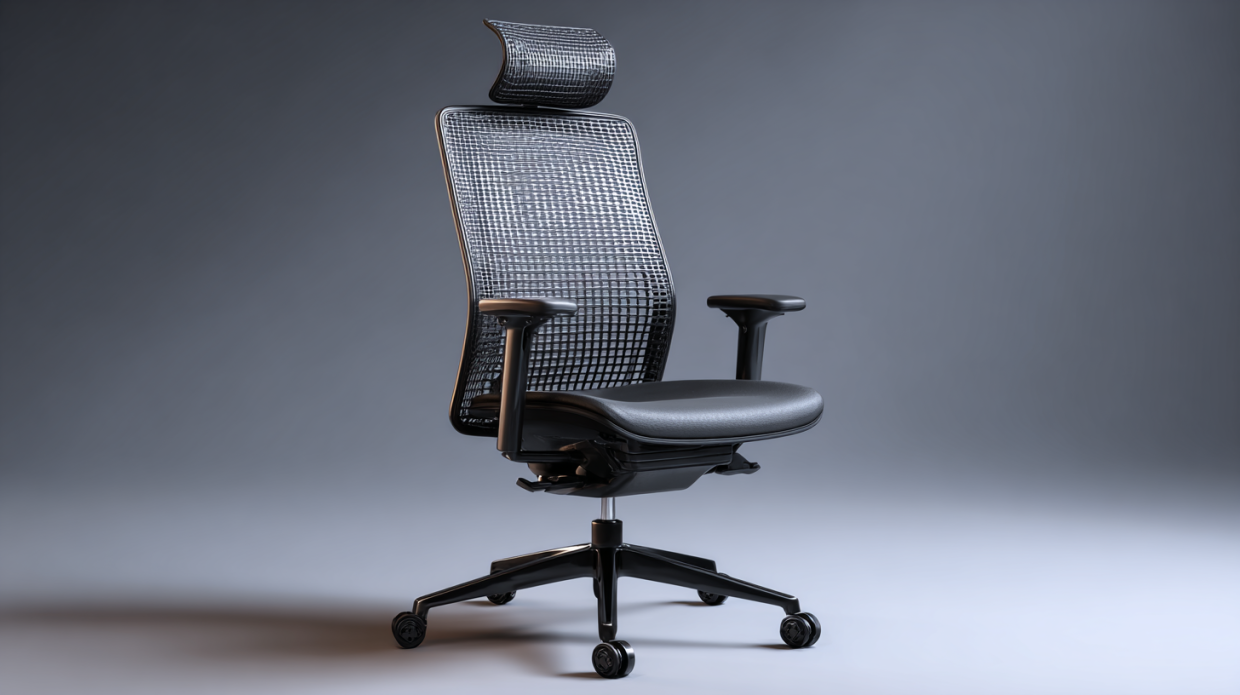
Sitting for extended periods is no longer a passive activity — it is a biomechanical challenge that demands the right equipment. Among the most consequential decisions a desk worker, manager, or facility buyer can make is choosing a chair that actively supports the body rather than simply holding it in place. The breathable mesh back chair has emerged as the industry standard for precisely this reason. Unlike foam-padded or solid-panel alternatives, mesh back seating provides ventilated, dynamic support that conforms to the natural curve of the spine while dissipating heat and moisture throughout the workday.
This guide takes an expert approach to the breathable mesh back chair category. We break down the mechanical specifications, material science, ergonomic adjustability features, certification standards, and real-world performance differences that separate an average mesh chair from a genuinely high-performing one. Whether you are outfitting a commercial office, a government workspace, or a home office, the information here will help you match the right product to your exact requirements.
Top 5 Breathable Mesh Back Chairs at a Glance
The following five products represent the most notable options currently available across commercial and direct-to-consumer channels. Each has been evaluated against the key performance criteria discussed throughout this guide.
1. Office Star Breathable Mesh Back Chair with Mesh Fabric Seat (Item #2300)
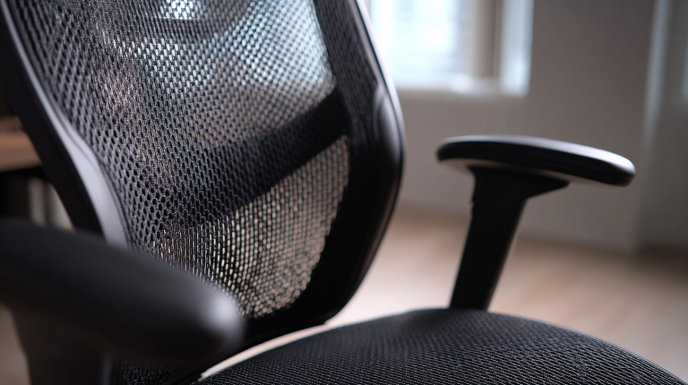
Brief Description: A mid-tier professional mesh chair combining a thick padded contour fabric seat with a full breathable mesh back. Features one-touch pneumatic seat height adjustment, 2-to-1 synchro tilt control with adjustable tension, and height-adjustable arms. Backed by a lifetime warranty on component parts and a 3-year fabric and foam warranty. Rated for commercial use with a 250 lb weight capacity and a shipping weight of 48 lbs.
Rating: New listing — no user reviews yet
Price Range: $340 – $397
2. Professional Breathable Mesh Back Chair w/ Eco Leather Seat (Model 2400E)
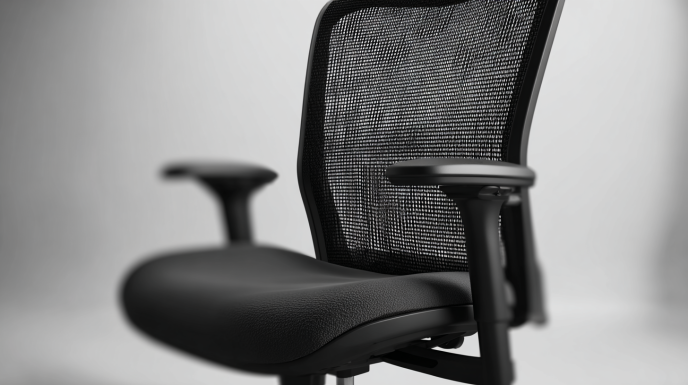
Brief Description: The 2400E from Office Star pairs a breathable mesh back with a thick padded contour bonded leather seat, offering a premium aesthetic without sacrificing airflow. Includes one-touch pneumatic height adjustment, 2-to-1 synchro tilt, height-adjustable arms with soft PU pads, and a heavy-duty gunmetal finish base with oversized dual-wheel carpet casters. GREENGUARD certified for indoor air quality compliance. Seat size: 20W × 19.5D × 3T inches.
Rating: Verified commercial listing — GREENGUARD certification as quality indicator
Price Range: $395 (50% off MSRP of $790)
3. Space Deluxe Black Breathable Mesh Back Chair with Headrest (Item #56935)
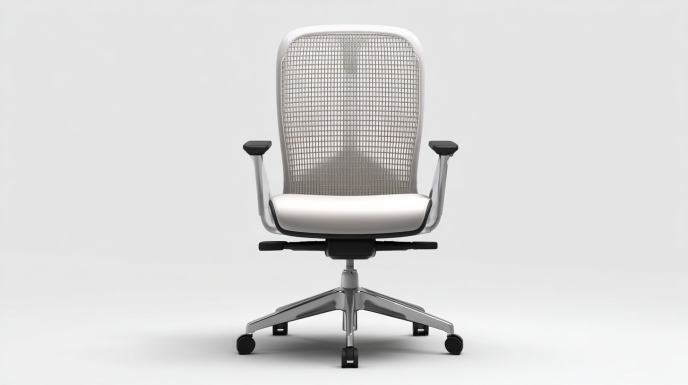
Brief Description: A high-back chair from Office Star’s Space 25 Series featuring a breathable mesh back, adjustable headrest, and adjustable lumbar support. Supports up to 275 lbs with a 15-year warranty. Infinite locking 2-to-1 synchro knee tilt control, height-adjustable T-arms with soft pads, GREENGUARD certified, and GSA compliant. Overall dimensions: 28.6″W × 26″D × 55″H. Built for full-day use in commercial, government, and institutional environments.
Rating: GSA Compliant with GREENGUARD certification — institutional trust benchmark
Price Range: $659
4. amseatec Ergonomic Mesh Office Chair with Flip-Up Arms (Model LY-9053)
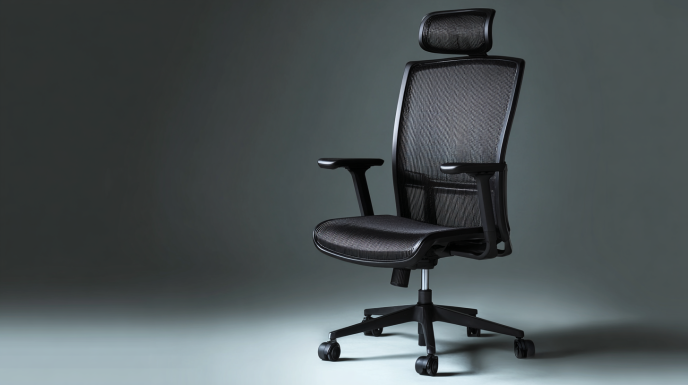
Brief Description: A space-efficient, BIFMA-certified mesh office chair designed for home offices, dorm rooms, and compact workspaces. The aerospace-grade plastic frame supports up to 300 lbs, backed by a 3-inch high-density foam seat cushion and a breathable mesh back. Flip-up armrests allow the chair to slide cleanly under desks. The 90–110° rocking tilt with tension control, smooth 360° swivel, and 5-year warranty deliver professional-grade performance at an accessible price point.
Rating: Amazon’s Choice designation; 2,000+ units purchased in the past month
Price Range: Competitive entry-level pricing with limited-time promotional availability
5. Executive Breathable Mesh Back Chair (SKU N1-5050)
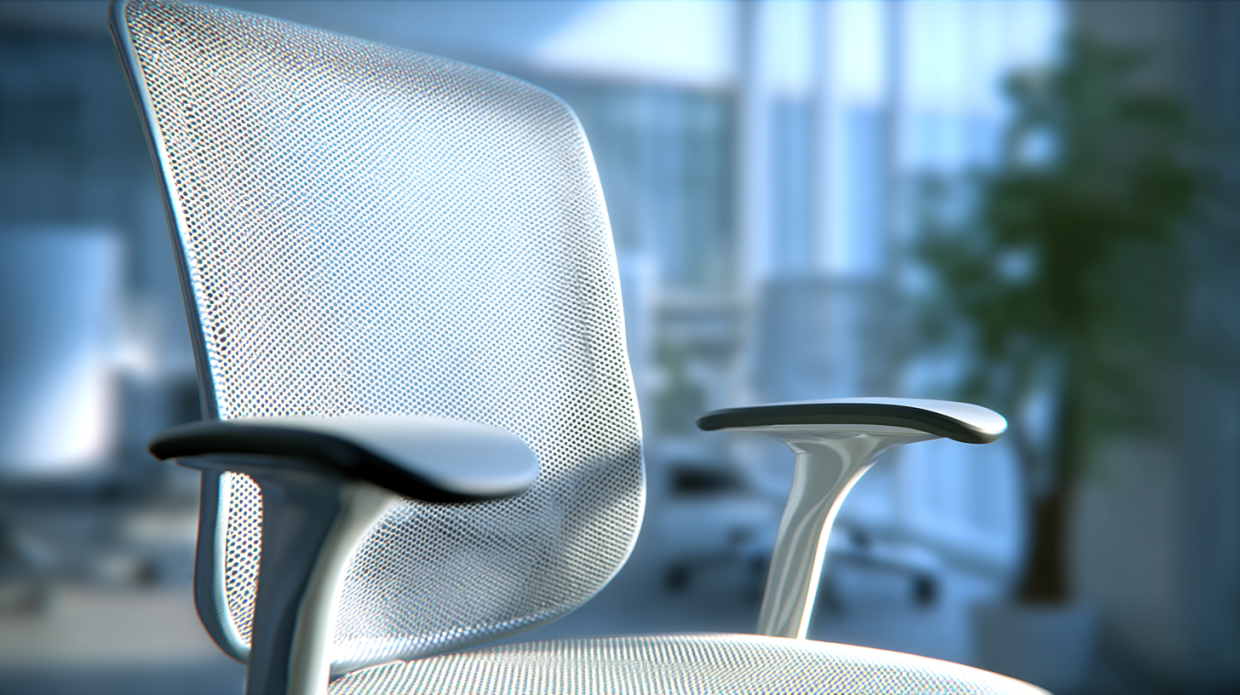
Brief Description: A top-tier executive option featuring an R2 SpaceGrid seat and back with a platinum finish base. Includes adjustable lumbar support, pressurized seat height adjustment, 2-to-1 synchro tilt with 4-position lock and anti-kickback, seat slider for depth adjustment, padded flip-up arms, a heavy-duty base, and oversized dual-wheel carpet casters. Assembled dimensions: 28.5W × 26.25D × 42.75H inches. Weight capacity: 250 lbs. Limited lifetime warranty on component parts.
Rating: Premium commercial listing — limited lifetime component warranty as quality indicator
Price Range: $816 (50% off MSRP of $1,632)
Why Mesh Back Design Matters: The Engineering Case
The defining characteristic of a breathable mesh back chair is not cosmetic — it is structural and physiological. The mesh panel functions as a tension-based support surface that stretches and adjusts under body weight rather than compressing or bottoming out like foam. This dynamic response is what ergonomists refer to as passive conformity: the material contours to the shape of the user’s back without requiring manual adjustment at every use session.
From a thermal management standpoint, traditional high-density foam or padded polyurethane backs trap body heat against the lumbar and thoracic regions. Over a standard eight-hour shift, this heat buildup contributes to discomfort, postural shifting, and fatigue — a progressive degradation that office workers often attribute to stress rather than the chair itself. Breathable mesh back materials, particularly high-resilience engineered variants like the R2 SpaceGrid used in executive models, maintain open airflow across the full surface of the back, actively venting heat and moisture throughout use.
The material specification of the mesh itself warrants close evaluation. Lower-cost mesh panels use standard polyester weaves that can deform, sag, or pill over time as the tension characteristics of the weave relax. Premium mesh products use engineered thermoplastic polymer threads with memory characteristics, maintaining their tension profile across years of continuous use. When a manufacturer lists a lifetime warranty on component parts, it is an implicit performance claim about these mesh panels as structural elements, not simply consumable upholstery.
Lumbar Support Systems: Fixed vs. Adjustable
Every breathable mesh back chair in this guide includes lumbar support, but the implementation varies substantially between models. Understanding these differences is critical for buyers with specific postural needs or those purchasing for multi-user deployments.
Fixed lumbar supports are built into the contour geometry of the mesh back panel itself. The natural S-curve of a well-designed mesh back positions a gentle forward protrusion at the L3–L5 vertebral zone — the area where most desk workers experience compressive strain. Fixed systems perform well when the user’s seated height falls within the chair’s designed optimal range and when overall back height is correctly matched to torso length. They are reliable for single-user environments where the chair is set up once and remains configured for that individual.
Adjustable lumbar supports add a mechanical element — typically a dial, lever, or sliding pad — that allows the user to move the support point vertically and, in some designs, increase or decrease its protrusion depth. The Space 25 Series chairs, the 2300, 2400E, and N1-5050 all specify adjustable lumbar support, making them appropriate for shared workstations, rotating shift environments, or procurement decisions covering a workforce with variable body types and seated heights.
For commercial procurement in healthcare facilities, government offices, or educational institutions, adjustable lumbar support is not a discretionary feature — it is a functional requirement. GSA-compliant listings such as the Space 25 Series confirm that this and related ergonomic standards are met at a procurement-verified level.
Tilt Mechanisms: Decoding Synchro Tilt Technology
One of the most technically significant differences between low-cost and professional-grade mesh back chairs is the tilt mechanism. The 2-to-1 synchro tilt configuration found across the Office Star product family — and explicitly specified in products 2300, 2400E, 56935, and N1-5050 — is a specific engineering arrangement that deserves a thorough explanation.
In a standard single-pivot tilt, the chair reclines from a single point near the seat rear, causing the seat pan to lift at the front edge as you lean back. This creates a shear force against the posterior surface of the thighs, reducing circulation and increasing seat contact pressure over time. In a synchro tilt system, the seat pan and backrest each pivot from separate points, with the backrest moving at twice the rate of the seat. When you recline 10 degrees, your seat pan only moves approximately 5 degrees — keeping the front edge near horizontal, maintaining leg circulation, and allowing full lumbar and thoracic extension simultaneously.
The 4-position tilt lock with anti-kickback specified on the N1-5050 executive model adds an additional control layer. Anti-kickback prevents the chair from snapping abruptly to vertical when tilt lock is released, enabling a controlled and gradual return to upright position. For environments with intensive daily use or shared seating across users of different weights, this feature reduces mechanical wear on both the tilt mechanism and the user’s postural muscles.
Tilt tension control — present across all five featured models — adjusts the spring resistance of the recline action. A heavier user requires higher tension to prevent the chair from collapsing immediately into full recline; a lighter user needs lower tension to achieve any meaningful reclining movement. Proper tension calibration is one of the most routinely overlooked ergonomic adjustments in daily chair use, and its presence as a user-controlled feature rather than a factory preset is a meaningful differentiator in this product category.
Pneumatic Seat Height Adjustment: Reading the Specifications Correctly
Every chair in this guide uses one-touch or pressurized pneumatic seat height adjustment, which is the professional standard for office seating across commercial and institutional applications. The gas cylinder mechanism allows for smooth, single-hand height adjustment without requiring the user to leave the seated position, and it remains the most mechanically reliable height adjustment method available.
What distinguishes chairs in this category is the seat height range — the total vertical travel the cylinder provides. The N1-5050 specifies a seat height range of 17.75 to 20.25 inches, a 2.5-inch travel window. The Space 25 Series chair lists seat height between 20.3 and 23.1 inches, a 2.8-inch range. For proper ergonomic positioning, a user’s feet should rest flat on the floor with knees at approximately 90 degrees, and the seat height range should cover the natural distribution of adult seated heights in the intended user group.
Buyers specifying chairs for users outside the average height range — particularly very short or very tall individuals — should verify cylinder specifications against published anthropometric data before committing to a model. A chair with a seat height range that begins too high will force shorter users into a tip-toe position or leave their feet unsupported, negating the lumbar support benefits the chair is designed to deliver.
It is also worth noting that lifetime warranties on pneumatic cylinders, as offered in the Office Star component warranty structure and the N1-5050’s limited lifetime coverage, represent measurable long-term value in commercial deployments. Cylinder replacement in the field can cost $50–$100 per unit, and across a procurement of twenty-plus chairs, warranty coverage on this single component can offset the price premium of a professional-grade model within three to five years of service.
Armrest Configurations: Height-Adjustable vs. Flip-Up
Armrest design is one of the most functionally differentiating specifications across mesh back chairs at similar price points. Two primary configurations appear in this product category, each with distinct use-case advantages.
Height-adjustable T-arms — used on the 2300, 2400E, 56935, and N1-5050 — allow the armrest pad to move vertically within a defined range. Proper arm height supports the forearms at elbow level, significantly reducing trapezius and cervical muscle loading across extended computer work. The PU (polyurethane) pads specified on the 2400E and the soft pads on the Space 25 Series reduce contact pressure on the extensor surface of the forearms, which matters for users who spend hours typing or operating a mouse. Hard armrests at otherwise correct heights can still generate ulnar nerve compression over time.
Flip-up armrests, as featured on the amseatec LY-9053 and the N1-5050 executive chair, provide a different utility profile. When flipped vertically, these arms eliminate lateral obstruction and allow the chair to slide fully under a desk surface. This is practically valuable in compact workspaces and shared environments where footprint management and chair storage are regular operational concerns. The N1-5050 specifies padded flip-up arms, which combines the clearance advantage of a folding design with the contact-comfort of cushioned pads — a feature pairing rarely found below the mid-tier commercial price band.
Weight Capacity and Frame Construction
Weight capacity is a structural specification reflecting the combined strength of the base, gas cylinder, tilt mechanism, seat pan subframe, and back support assembly. Across this product set, capacities range from 250 lbs (N1-5050, 2300) to 300 lbs (amseatec LY-9053), with the Space 25 Series headrest model rated at 275 lbs.
Frame materials vary accordingly. The amseatec model uses aerospace-grade plastic for its primary frame paired with a reinforced coated steel base — a material combination that achieves the 300 lb capacity at a shipping weight of approximately 23 lbs, making it the most portable option in this group. The Office Star commercial and executive models use metal-reinforced mechanisms and heavy-duty bases, resulting in shipping weights of 47–61 lbs. Heavier construction generally correlates with greater stability during dynamic use — the kind of stability that registers as confidence during repeated desk-to-chair transitions throughout the working day.
For commercial procurement, the heavy-duty gunmetal finish base on the 2400E and the platinum finish base on the N1-5050 are not aesthetic choices alone. They are indicators of casting density and corrosion-resistance specification that directly affect longevity in high-traffic deployments where chairs are moved, stacked, and repositioned regularly.
Certifications: GREENGUARD, BIFMA, and GSA Compliance
The certification landscape for commercial office seating provides independent verification that product descriptions alone cannot offer. Three certifications appear across the products reviewed here, each with distinct implications for buyers.
GREENGUARD certification, held by the 2400E and the Space 25 Series chair, verifies that a product’s chemical emissions — including volatile organic compounds and particulates — fall within established safe thresholds for indoor environments. This is especially relevant for buyers in healthcare, education, and government facilities where occupant air quality is a regulatory and operational priority. Products achieving GREENGUARD Gold certification meet an even stricter standard designed for environments housing sensitive populations such as children or the medically compromised.
BIFMA certification (Business and Institutional Furniture Manufacturers Association), held by the amseatec LY-9053, certifies compliance with ANSI/BIFMA standards for structural integrity, stability, and durability. BIFMA testing subjects chairs to repeated loading cycles designed to simulate years of realistic use. A chair that clears these benchmarks has demonstrated structural performance under documented, reproducible test conditions — not simply under factory quality control visual inspection.
GSA compliance, noted on the Space 25 Series headrest chair, means the product is approved for procurement by U.S. government agencies under General Services Administration contract vehicles. This designation requires the manufacturer to satisfy defined quality, domestic origin, and contractual standards. For institutional buyers managing procurement compliance across federal, state, or local government environments, GSA compliance simplifies the purchasing process and removes regulatory ambiguity.
Seat Construction: Cushion Depth, Material Science, and Contact Comfort
While the breathable mesh back is the primary ergonomic differentiator in this category, seat construction has an equally significant impact on daily comfort. The products in this guide use three primary seat approaches, each with distinct performance profiles.
Mesh fabric seats, as used in the Item #2300, combine a fabric upholstery layer with contoured foam padding. The open weave of the mesh surface allows some airflow from beneath the seat, reducing thermal accumulation at the posterior contact surface. These seats wear consistently over time and respond well to standard cleaning protocols, making them a practical choice for high-frequency commercial use.
Bonded or eco-leather seats, as in the 2400E, provide a polished professional appearance with good abrasion resistance. Leather alternatives do not breathe as freely as mesh, but the 2400E addresses this by combining the leather seat with a full breathable mesh back — directing airflow management to the larger surface area contact point while maintaining the premium aesthetic at the seat.
High-density foam seats with Oxford fabric, as specified in the amseatec model, represent the strongest cushioning performance specification in this review group. The LY-9053 lists a 3-inch high-density foam seat cushion — notably generous for the price tier — with multi-layered composite padding and resilient memory foam. This progressive resistance profile is soft on initial contact, then firms under sustained load, reducing pressure point development across extended sitting sessions.
The N1-5050 executive chair stands as the technical apex of this group with its R2 SpaceGrid full-mesh construction at both seat and back. This configuration maximizes airflow and dynamic support at both primary contact points simultaneously, which represents the functional ideal of the breathable chair design philosophy.
Use Case Matching: Aligning Specifications to Real Environments
Matching the right product to the right environment requires more than comparing price points. The specifications reviewed here map directly to real-world deployment requirements.
For commercial office environments with multiple users sharing seating across shifts, the Space 25 Series headrest chair and the N1-5050 executive model are the most defensible choices. Their adjustable lumbar systems, tilt lock mechanisms, and heavy-duty base constructions accommodate the variability of shared use, while warranty terms and certification status protect long-term procurement value.
For private offices and manager-level workstations, the 2400E Professional with eco leather seat and the 2300 mesh seat model offer a calibrated balance of professional appearance, verified ergonomic performance, and GREENGUARD certification — with unit pricing accessible even for single-purchase decisions.
For home offices and compact workspaces, the amseatec LY-9053 delivers BIFMA-certified structural performance with a space-saving flip-up arm design, a 300 lb weight capacity, and a 5-year warranty. Its Amazon’s Choice designation and documented purchase volume across thousands of verified buyers confirm that its performance at the price point is legitimate rather than speculative.
Final Assessment: The Specifications That Define Long-Term Value
A breathable mesh back chair earns its price through the disciplined integration of mechanical precision, material durability, ergonomic adjustability, and verified performance. Based on the full specification review, one feature cluster stands above all others in predicting daily functional value: the pairing of adjustable lumbar support with 2-to-1 synchro tilt control. This combination is present across all five featured models and should be treated as a baseline requirement rather than a premium upgrade. Buyers who compromise on either element will make postural compensations that accumulate into chronic discomfort over months of sustained use.
Certification status — GREENGUARD, BIFMA, or GSA — provides third-party verification of quality claims that manufacturer descriptions cannot substitute for. Prioritizing certified products reduces procurement risk and simplifies compliance documentation for institutional buyers managing liability exposure across large seating deployments.
Frame construction, weight capacity, and component warranty terms remain the three specification categories most predictive of long-term cost of ownership. A chair with a higher upfront cost but a lifetime cylinder warranty and a heavy-duty base will, in nearly every commercial deployment scenario, outperform a lower-cost alternative across a three-to-five-year replacement cycle. The breathable mesh back chair is a category defined not by a single standout specification but by the quality of integration across all its systems — and the five products reviewed here demonstrate the full functional range of what that integration looks like from entry-level to executive-grade performance.